On December 12, 2024, Chartable shut down for good. Spotify had acquired the company in 2022 and eventually retired it as a standalone product after folding parts of the business into its own ecosystem. For a lot of podcasters, that meant losing the tool they had relied on for chart tracking, SmartLinks, and campaign attribution.
If you used Chartable, the practical question now is not what happened. It is what you actually need to replace, and what can safely be left behind.
What Chartable actually did
Chartable was best known for three things:
- Chart tracking: monitoring your podcast's position on Apple Podcasts charts across countries and categories
- SmartLinks: trackable URLs that detected a listener's device and redirected to Apple Podcasts, Spotify, or their preferred app
- Attribution: connecting downloads to specific marketing campaigns so you could measure which promotions actually drove listens
For many teams, Chartable was the default way to keep an eye on rankings and link performance. Once it disappeared, a lot of people realised how much of their workflow depended on one product.
What you lost, and what you probably did not realize you were missing
Here is the part worth saying out loud: Chartable was useful, but it was never a complete view of podcast performance. It leaned heavily on Apple Podcasts, updated charts daily rather than hourly, and left out things like keyword tracking, SEO analysis, and competitor monitoring.
Most users also lived with blind spots they had simply learned to accept. They did not know when the show picked up traction in countries they were not checking. They could not see which search terms were helping discovery. They had almost no structured view of what similar podcasts were doing.
Those gaps were always there. The shutdown just forced people to notice them.
Your options now
The podcast analytics landscape has changed since Chartable closed. Here is an honest look at what is available:
Free tools (limited)
Ausha Charts and mowPod let you browse current podcast charts for free. You search for a show, see where it ranks today, and that is basically the experience. No tracking over time, no alerts, no history. They are chart browsers, not full analytics tools.
OP3 (Open Podcast Prefix Project) provides free, open-source download analytics. It is transparent and privacy-respecting, but it only measures downloads. It does not help with rankings, reviews, or search visibility.
Podtrac offers free IAB-certified download measurement plus paid measurement-and-growth plans. Depending on plan, its tools include demographics, Smart Links, promo trades, attribution, and advanced reporting. It does not publish the same ongoing podcast-app chart, review, or search-position workflow as Podstatus.
Paid tools
Podkite still positions itself around podcast charts, reviews, and podcast links. Its public pages did not expose current machine-readable plan or feature details when checked July 29, 2026, so verify current pricing, SmartLinks, platforms, and limits directly instead of relying on historical descriptions.
Podgagement charges $9-19 per month per selected podcast and publishes Apple Podcasts and Spotify ranking and search monitoring with hourly detail. Its differentiator is engagement and promotion: listener feedback, NFC beacons, images, landing pages, and Slack notifications.
Podrover is review-focused, covering Apple Podcasts and Podchaser with email, push, and Slack alerts, sharing tools, widgets, and RSS feed health. It starts at $30/year for one podcast and does not publish podcast-app chart tracking.
The all-in-one option
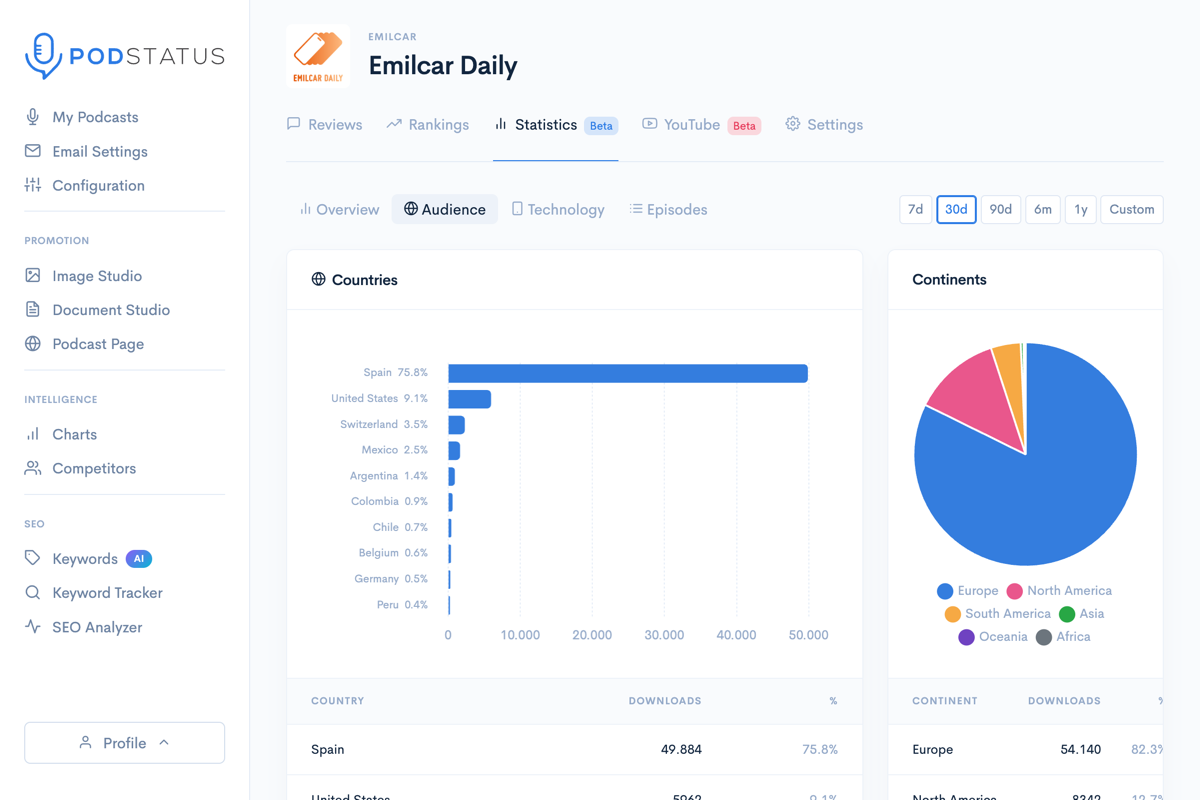
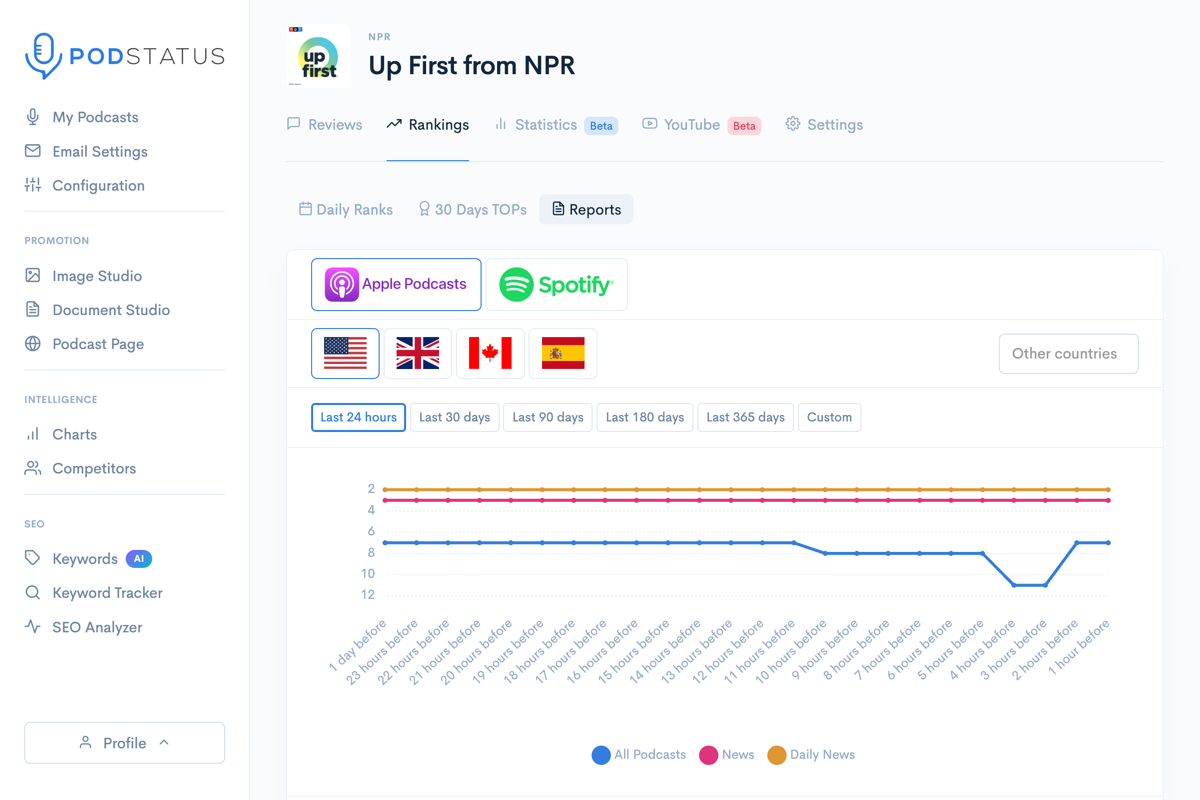
Podstatus covers the most ground: chart tracking across Apple Podcasts, Spotify, and iVoox in 175 countries with hourly checks, plus review monitoring, competitor intelligence, OP3 data, images, and email reports on every plan. Keyword tracking, SEO analysis, YouTube analytics, and PDF reports begin on Professional. Solo costs $7.99 month-to-month or $59.99/year for up to 5 podcasts (a rounded $5/month annual equivalent).
We wrote a detailed feature-by-feature comparison of what Chartable offered versus what Podstatus provides, including an honest distinction between Podstatus Podcast Pages and the tracked SmartLinks and download attribution that Podstatus does not replace.
What about SmartLinks?
SmartLinks were Chartable's most unique feature, and they are the hardest to replace. Podtrac publishes Smart Links on eligible plans, and Captivate offers a podcast-link workflow as part of its hosting platform. Historical Podkite materials also described podcast links, but verify current availability directly. Podstatus provides a public Podcast Page with listening-app links, but it does not provide tracked SmartLinks or campaign attribution.
If SmartLinks are core to your workflow, you may still want a dedicated tool for them. But if what you mainly miss is chart tracking and a way to keep tabs on performance, there are now better options than the old Chartable setup.
Three things to do today
1. Start tracking again. Every day without a tracker is a day of history you do not get back. Rankings, reviews, and search visibility are moving whether you record them or not.
2. Use the switch as an excuse to widen the view. Chart rankings matter, but they are only one layer. Reviews, search visibility, and competitive movement give you a much clearer sense of what is actually happening.
3. Do not overpay for the wrong category of product. Some tools charge per podcast and get expensive quickly. Others are priced for ad buyers or agencies, not for people tracking their own show.
If you want to see how Podstatus stacks up against every option in detail, read our complete Chartable alternative comparison. It includes feature tables, pricing breakdowns, and an honest list of what each tool does and does not do.
Chartable was useful for a long time. The upside of replacing it now is that you do not have to settle for the same limitations it had.