Picking a podcast analytics tool used to be easy: most people defaulted to Chartable and moved on. When Chartable shut down on December 12, 2024, that easy answer disappeared, and a lot of podcasters had to compare tools they had never seriously looked at before.
I spent time going through the current options with one question in mind: if you actually run a podcast, which of these tools is worth paying for? Some are genuinely useful. Some are expensive for what they offer. And some are fine as a quick check, but not enough if you want to understand how your show is growing.
Disclosure: Podstatus publishes this guide and is one of the products compared. Prices and feature claims were checked against vendors' public pages on July 29, 2026, where those pages exposed readable details. Podkite did not expose current plan content in machine-readable public HTML, so we label those details unverified instead of repeating historical claims. Confirm time-sensitive details with each vendor before buying.
Here is the shortlist.
1. Podstatus: the all-in-one option
This is our product, so obviously you should read this section knowing that. Still, the reason Podstatus exists is pretty simple: most podcast tools only solve one part of the problem.
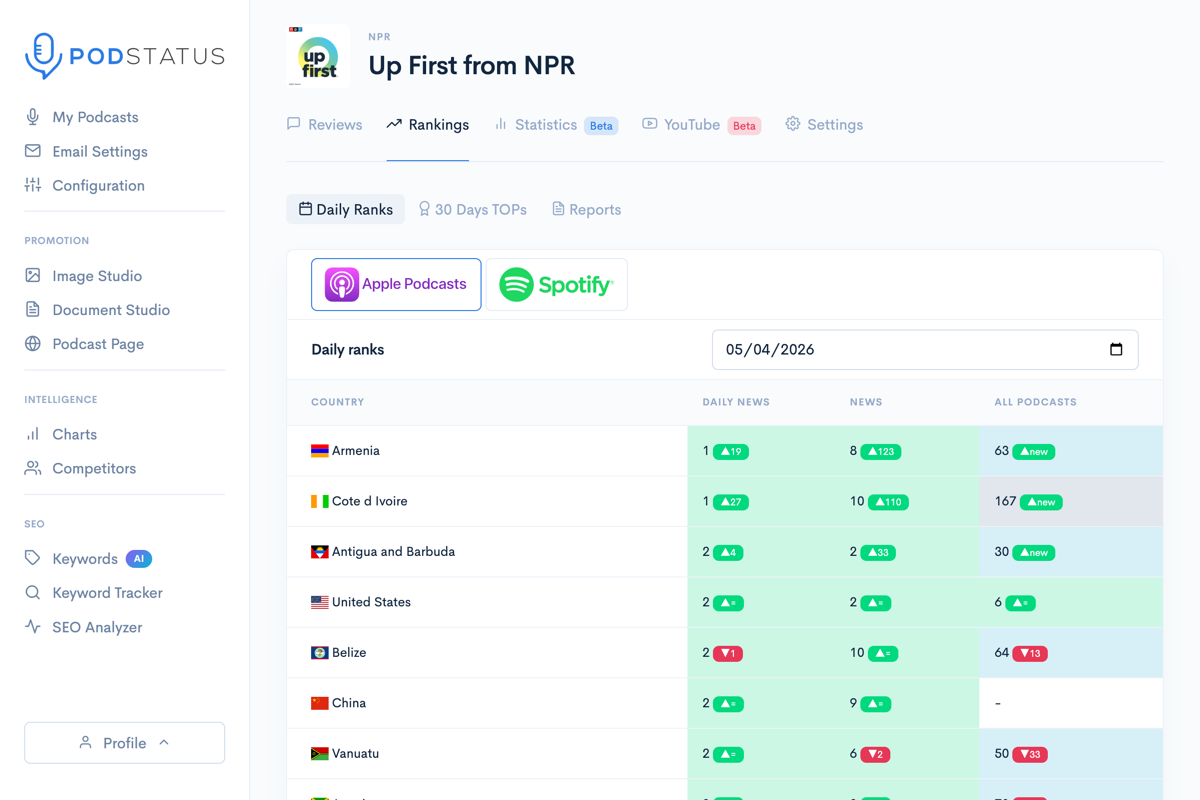
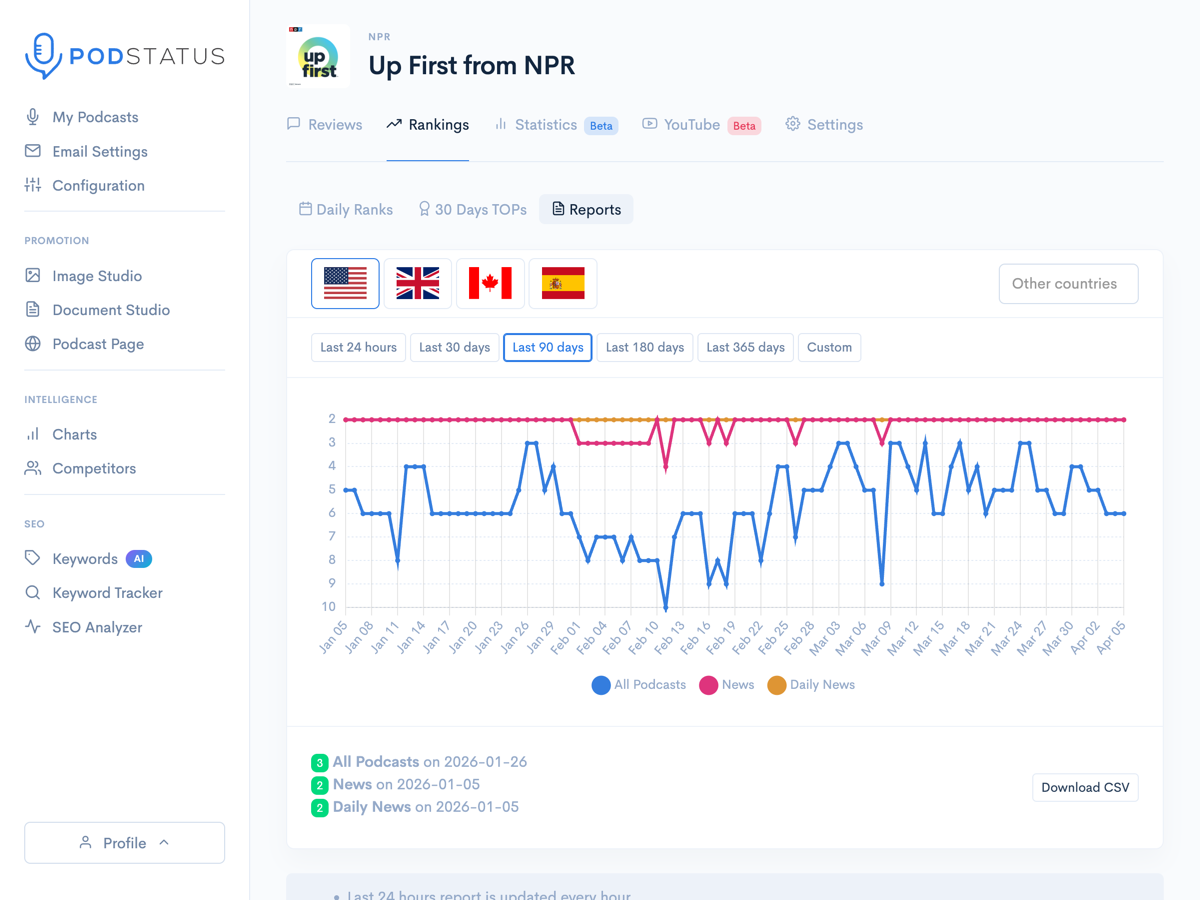
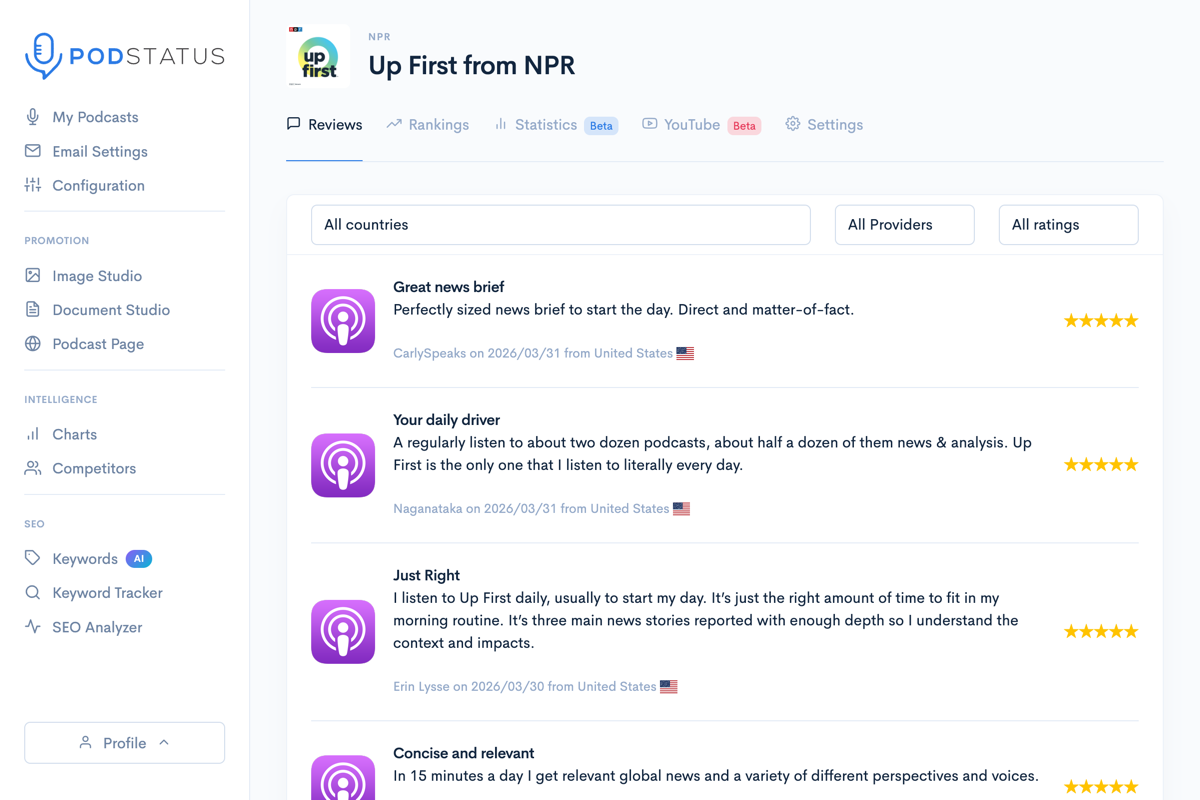
Podstatus tracks rankings across Apple Podcasts, Spotify, and iVoox in 175 countries with hourly checks. Every plan also includes review monitoring, competitor intelligence, OP3 data views, Image Studio, and automated emails. Professional and Network add keyword positions, the SEO Analyzer, YouTube analytics, and PDF reports.
Price: Solo is $7.99 month-to-month or $59.99/year for 5 podcasts. Professional is $14.99 month-to-month or $119.99/year for 12. Network is $29.99 month-to-month or $239.99/year for 25. The annual plans have rounded monthly equivalents of $5, $10, and $20. Free 7-day trial.
Where it shines: It covers more of the day-to-day work in one place than the other tools here, and the pricing is account-based rather than punishing you for every extra show.
Where it does not: Its Podcast Pages provide listening-app links but not click or campaign attribution, there is no permanent free plan, and historical tracking starts when you sign up.
If you want the details on how we stack up against specific competitors, we have written honest comparisons: vs Podgagement, vs Podkite, vs Podrover, vs Rephonic, and vs Podtrac.
2. Podgagement: best for listener engagement
Podgagement is interesting because it is not trying to be a pure analytics tool. It leans more into audience engagement, with voicemail collection, NFC Podcast Beacons, social proof image generators, and Slack notifications alongside ranking and review tracking.
Price: $9-19/month per podcast. That is the catch. If you run three shows, you are looking at $27-57/month.
Where it shines: The engagement features are genuinely different. If your main goal is getting listeners to interact with the show, Podgagement has ideas most competitors do not.
Where it does not: Podgagement now covers Apple Podcasts and Spotify rankings and search positions with hourly detail, so the real gaps are different: Podstatus additionally covers iVoox and publishes a separate RSS/metadata SEO audit, OP3 views, and PDF reporting on eligible plans. Podgagement's per-podcast pricing also climbs as a portfolio grows.
3. Podkite: verify the current offer directly
Podkite's public site still identifies the product with podcast charts, reviews, and podcast links. However, its pages did not expose current plan or feature details in machine-readable public HTML when checked on July 29, 2026.
Price: Not independently confirmed from current public pricing content.
Where it may fit: Historical materials described chart monitoring, reviews, SmartLinks, a player, and older ranking history. Verify which of those remain available and on which plan.
Where it does not: The present limitation is verifiability. We cannot responsibly claim current prices, limits, platforms, refresh rates, or missing features until Podkite publishes readable first-party details.
4. Podrover: the review specialist
Podrover collects Apple Podcasts and Podchaser reviews from more than 100 countries. It adds email, push, and Slack alerts, automatic sharing, review images and widgets, and RSS feed-health checks.
Price: $30/year for one podcast; $5/month for up to 3; $15/month for up to 12; or $30/month for up to 20.
Where it shines: It is focused, inexpensive at the entry level, and has deeper alert and sharing options than a general analytics dashboard.
Where it does not: It does not publish ongoing podcast-app chart or search-position tracking. If you want ranking, SEO, and competitive context around those reviews, you need another tool next to it.
5. Rephonic: built for brands, not podcasters
Rephonic is where a lot of people get sidetracked. It looks adjacent to podcast analytics, but it is really a research database for PR teams, agencies, and advertisers looking for shows to sponsor.
Price: $99/month for Light, $149/month for Standard, and $299/month for Business.
Where it shines: If you buy podcast ads for work, the database is genuinely useful. It is built for prospecting, not for monitoring your own show.
Where it does not: If you are an independent podcaster tracking your own show, much of the price funds contact, demographic, and campaign-research capabilities you may not need. Rephonic does not publish the same continuous podcast search-position, RSS/metadata audit, and hourly own-show chart workflow as Podstatus.
We wrote a detailed comparison with Rephonic if you are weighing the two.
6. Podtrac: the download measurement standard
Podtrac Measurement and Growth matters because sponsors and networks know the name. If someone asks for IAB-certified download numbers, this is usually what they mean.
Price: Free for basic IAB-certified measurement. Podtrac also publishes paid growth and reporting plans, but its current exact prices were not available as machine-readable text when checked.
Where it shines: It combines certified measurement and audience data with industry rankings and, on eligible plans, Smart Links, promo trades, promo attribution, and advanced reporting.
Where it does not: It does not publish the same ongoing native-app chart, review, or podcast-search-position workflow as Podstatus. The two products answer different questions and can be complementary.
7. Free chart tools (Ausha Charts, mowPod)
These are not really analytics tools so much as chart lookups. You search for a show, see where it ranks right now, and move on.
Price: Free.
Where they shine: Quick, no-commitment chart lookups.
Where they do not: They give you a snapshot, not a pattern. There is no history, no alerting, and no way to understand whether what you are seeing is progress or just a one-day blip.
So which one should you pick?
The right choice depends on what you actually need:
- If you want broad monitoring under one account: Podstatus. Three chart platforms, up to 175 markets, hourly checks, reviews, and competitors start on Solo; keywords, SEO, YouTube, and PDF reports start on Professional.
- If you want audience engagement tools: Podgagement, but budget accordingly if you have multiple shows.
- If you are considering Podkite: verify its current offer directly; its plan details were not readable during this review.
- If you mainly care about reviews: Podrover starts at $30/year and adds push and Slack delivery, sharing tools, and feed-health checks.
- If you buy podcast ads for a living: Rephonic is built for you.
- If sponsors need IAB-certified numbers: Podtrac.
- If you just need a quick chart lookup: Ausha Charts or mowPod.
Most podcasters do better with one tool that can follow the whole story: rankings, reviews, search visibility, and competitors. If you only need one narrow feature, there are cheaper or more specialized options above. But if you are tired of stitching together three partial tools and still missing context, that is the gap Podstatus is meant to fill.