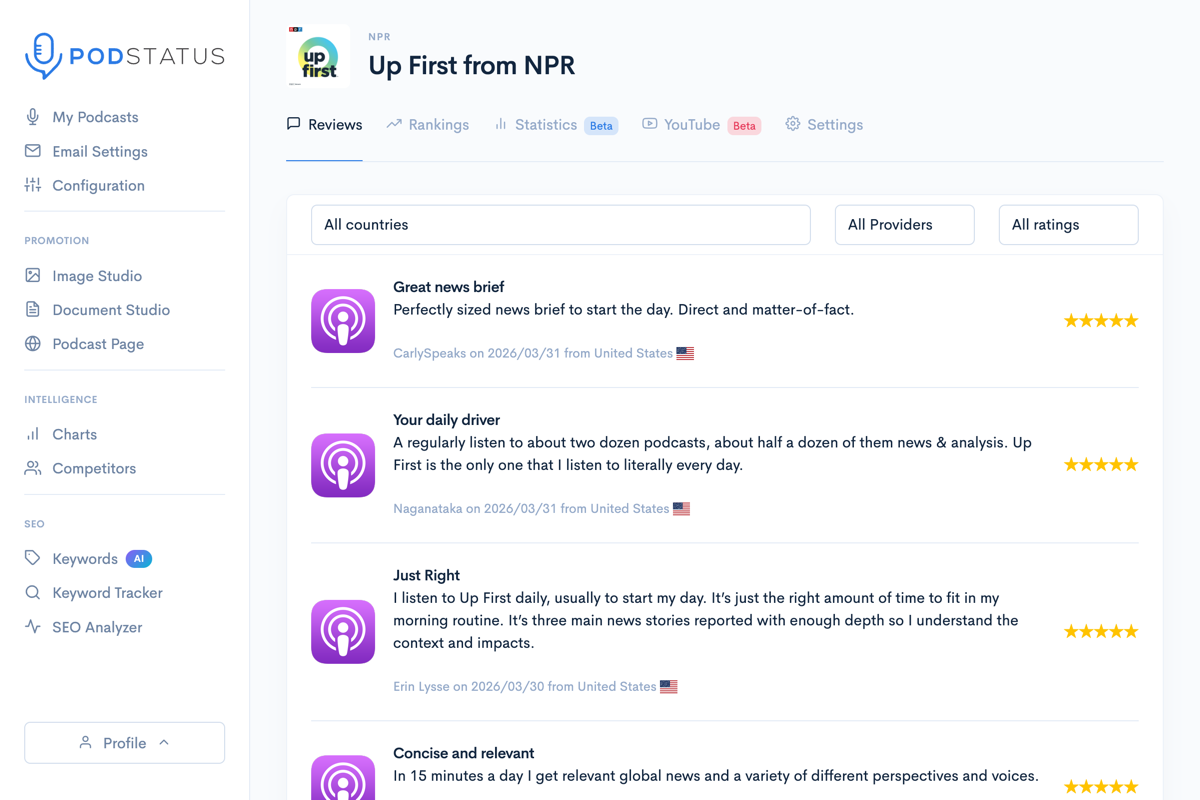
One of the strangest things about Apple Podcasts reviews is that they are split by country. A listener in Spain sees one set of reviews, a listener in the US sees another, and someone in Brazil can leave a glowing review that you never notice unless you go hunting for it manually.
Almost nobody does that consistently, which is why review trackers became useful in the first place.
The catch is that "review tracker" can mean very different things. Some tools simply tell you a new review came in. Others give you enough context to understand whether those reviews line up with actual growth.
Disclosure: Podstatus publishes this guide and is one of the products compared. Product details and prices were reviewed on July 29, 2026. Podkite did not expose current plan content in machine-readable public HTML, so its details remain unverified; confirm all time-sensitive claims with each vendor.
Why reviews matter more than you think
Reviews are not just nice for the ego, though they do help on a rough week. They matter for three practical reasons:
Social proof. New listeners notice ratings and recent reviews immediately. Fresh activity makes a show feel alive; an empty review section does the opposite.
Feedback you did not ask for. Reviews often say the quiet part out loud. "Great content but the audio is rough" is not fun to read, but it is useful.
Listener decision signal. Reviews can help a prospective listener decide whether a show is worth trying. Apple explicitly says ratings and reviews do not directly influence Charts or Search, so treat them as feedback and social proof rather than a guaranteed ranking tactic.
The only problem is that none of this helps you if half the feedback is sitting in storefronts you never check.
The tools, one by one
Podstatus
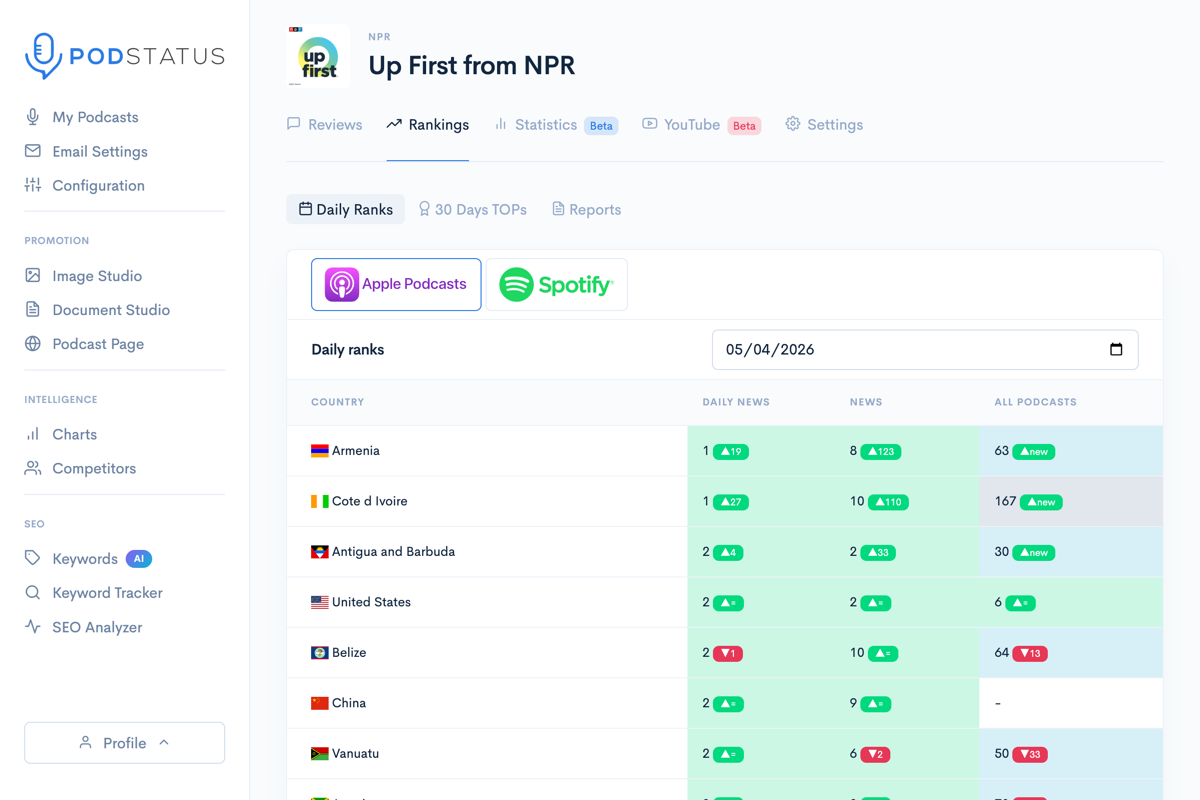
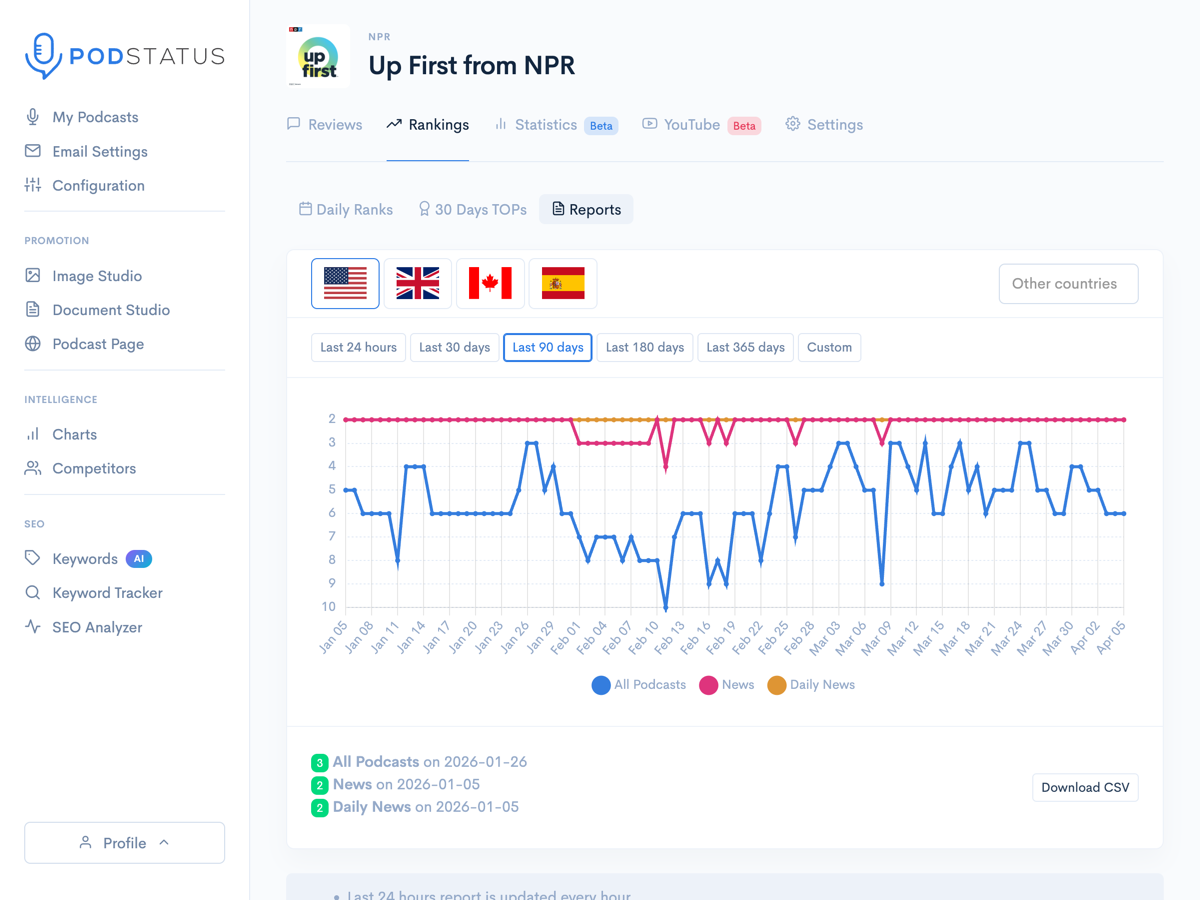
Collects Apple Podcasts reviews across up to 175 markets plus Podchaser reviews, and sends alerts when new ones come in. The bigger difference is that reviews sit next to ranking data, keyword positions, SEO scores, and competitor tracking instead of living in their own little silo.
That changes how you use reviews. If someone says they found your show by searching for "meditation tips," you can check whether you are actually ranking for that term. If a burst of positive reviews comes in, you can see whether it lines up with chart movement. The review becomes part of a pattern rather than a standalone notification.
$7.99 month-to-month or $59.99/year for up to 5 podcasts (a rounded $5/month annual equivalent). That Solo plan includes review monitoring, rankings, competitors, OP3, images, and email reports; search keywords and the SEO Analyzer begin on Professional. Full comparison with Podrover.
Podrover
Podrover is the review specialist. It collects Apple Podcasts and Podchaser reviews across more than 100 countries, with email, push, and Slack alerts, automatic sharing, images and widgets, and RSS feed-health checks.
$30/year for one podcast, then $5/month for up to 3, $15/month for up to 12, or $30/month for up to 20.
That focus is both the appeal and the limit. If your goal is "deliver and share every review," Podrover has a strong workflow. If you also want to know whether reviews coincide with rankings or discoverability signals, you will need something else next to it.
Podgagement
Podgagement publishes review monitoring in nearly 200 places, including Apple Podcasts, Podchaser, and Goodpods. Slack notifications are useful for teams that already work there.
$9-19/month per podcast. The engagement features (voicemail, NFC beacons) add value if you want to actively collect listener feedback beyond organic reviews.
The downside is still the per-podcast pricing. If you manage multiple shows, the total climbs quickly; the upside is that ranking and search monitoring plus listener-feedback and promotion tools live beside the reviews. Detailed comparison here.
Podkite
Podkite's public site identifies the product with charts, reviews, and podcast links, but did not expose current plan, source, alert, or limit details in machine-readable public HTML when checked July 29, 2026.
Current pricing was not independently confirmed.
Historical descriptions included a free review-tracking tier, but verify the current offer directly before relying on it. Podstatus vs Podkite comparison.
Adjacent tools that are not dedicated review trackers
Podtrac focuses on measurement and growth tools, while Ausha Charts and mowPod are chart browsers. Rephonic can surface ratings and reviews inside its research profiles, but its core workflow is podcast discovery, audience research, and outreach rather than owned-show review alerts. None is a direct substitute for a dedicated review-monitoring inbox.
Can I track Spotify reviews?
Short answer: no, not in the same way. Spotify does not expose podcast reviews and ratings publicly the way Apple Podcasts does, so every serious review tracker ends up focused on Apple.
If Spotify is your bigger concern, you are usually better off watching chart rankings and search visibility there instead.
Reviews in context vs. reviews in isolation
This is the part most reviews-only tools miss.
Knowing that someone left a 5-star review in Australia is nice. Knowing that the same week you entered the top 20 there, and started ranking for "true crime podcast Australia," is much more useful. That tells you there is momentum in a market you might want to lean into.
A review-only tool gives you the event. A broader monitoring tool gives you the event and the explanation around it.
That is the difference between Podrover at roughly $2.50/month on its one-podcast annual plan and Podstatus Solo at $59.99/year for up to 5 podcasts. Both track reviews; Podstatus Solo also adds rankings, competitors, OP3 views, images, and email reports.
My take
If you genuinely only want review alerts, Podrover is still the cleanest low-cost option.
If you want reviews to be part of a bigger picture, Podstatus makes more sense. You pay a little more, but you stop treating reviews as isolated messages and start using them as part of your growth data.
Either way, manual checking just does not scale. Your listeners are leaving feedback in places you are probably not opening, and there is no reason to keep missing it.